The Science of Dog Urine: Why Odors Return and Stains Set
The best home remedy for dog urine on carpet starts with blotting up excess liquid immediately, then applying a 1:1 mixture of distilled white vinegar and cool water to neutralize alkaline ammonia, followed by a layer of baking soda to absorb moisture and odor. For older yellow stains, a solution of diluted 3% hydrogen peroxide mixed with a few drops of mild dish soap effectively breaks down dried organic pigmentation.
To understand why pet accidents can be tricky to clean, it helps to look at the chemistry of dog urine. Fresh urine exits the body at a slightly acidic or neutral pH. As it sits, bacteria begin decomposing the urea, producing volatile ammonia compounds that emit a sharp, pungent odor. Over time, as the moisture evaporates, the residue transforms into concentrated alkaline salts and insoluble uric acid crystals.
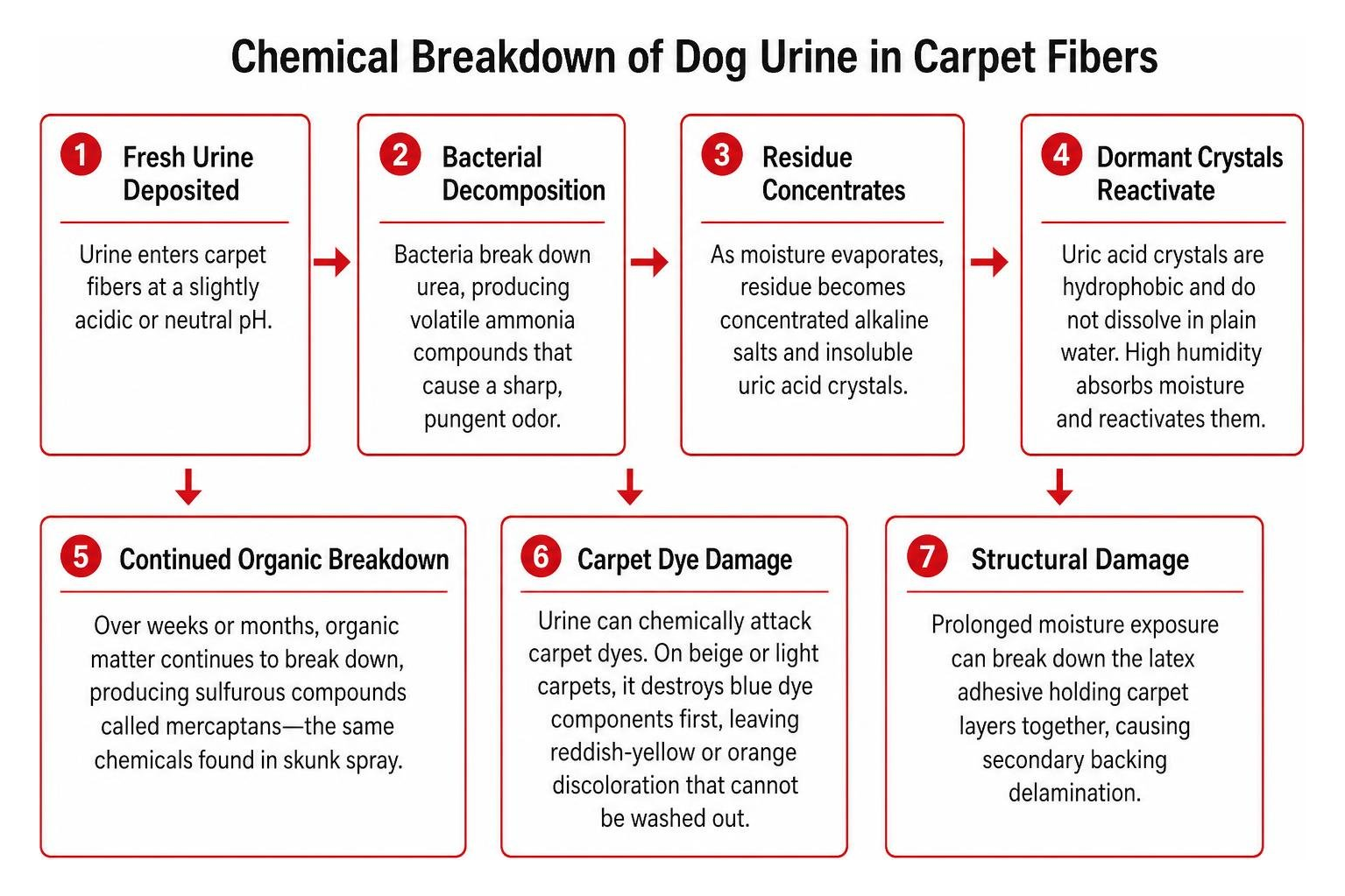
These uric acid crystals are hydrophobic—they do not dissolve in plain water. When humidity rises during warm summer months or rainy days, dormant crystals absorb atmospheric moisture and reactivate. As organic matter continues to break down over weeks or months, it produces sulfurous compounds called mercaptans—the very same chemicals found in skunk spray.
Beyond the lingering stench, urine can permanently alter your carpet fibers. According to technical findings from the Carpet and Rug Institute, pet urine can chemically attack carpet dyes. On beige or light-colored carpets, urine often destroys the fragile blue dye components first, leaving behind reddish-yellow or orange discoloration that cannot simply be washed out. Furthermore, prolonged moisture exposure can break down the latex adhesive holding the carpet layers together, causing secondary backing delamination.
Understanding these chemical stages helps you choose the right cleaning strategy, as highlighted in veterinary insights on pet accident cleanup. Routine carpet cleaning for pet owners requires matching your cleaning approach to whether an accident is brand new or deeply set.
| Factor | Fresh Urine Accidents | Old, Set-In Urine Stains |
|---|---|---|
| Primary Chemical Compounds | Urea, liquid water, mild ammonia gas | Insoluble uric acid crystals, mercaptans |
| pH Level | Neutral to slightly acidic (pH 6–7) | Alkaline salts (pH 8–9+) |
| Carpet Penetration Depth | Surface fibers and upper carpet backing | Deep padding, backing, and subfloor |
| Fiber & Dye Impact | Minimal if blotted within 15–30 minutes | Permanent fiber bleaching or dye destruction |
| Primary Treatment Goal | Liquid extraction and acid-base neutralization | Crystal digestion and deep extraction |
| Recommended Cleaners | 1:1 vinegar-water flush + baking soda | Bio-enzymatic digesters or peroxide lift |
Finding the Best Home Remedy for Dog Urine on Carpet: Top DIY Solutions
When an accident happens, your kitchen pantry holds several basic cleaning agents. Natural ingredients like distilled white vinegar, sodium bicarbonate (baking soda), 3% hydrogen peroxide, and mild dishwashing liquid are staples in best carpet cleaning home remedies.
Before applying any DIY solution to your floor, always perform a spot test on a small, hidden patch of carpet—such as inside a closet or along a baseboard corner. Check the area after 15 minutes with a clean white rag to ensure the carpet dyes do not bleed or discolor.
Fresh Accidents: The Best Home Remedy for Dog Urine on Carpet Using Vinegar and Baking Soda
For fresh urine discovered within minutes of the accident, a two-stage acidic-alkaline neutralizing treatment helps lift pigments and neutralize surface odors:
- Blot Firmly: Place several plain white paper towels over the wet puddle. Step on the towels with flat shoes or apply heavy body pressure to draw liquid up from the fibers. Continue swapping towels until no more liquid transfers. Never scrub or wipe, as this spreads the stain.
- Apply Diluted Vinegar: Mix 1 cup of distilled white vinegar with 1 cup of cool water in a spray bottle. Spray the spot generously to penetrate the damp fibers. The acetic acid neutralizes alkaline ammonia salts.
- Allow Dwell Time: Let the vinegar mixture sit for 5 to 10 minutes to break down residue.
- Blot Excess Liquid: Press dry paper towels over the damp area to extract the vinegar and dissolved urine salts.
- Apply Baking Soda: Sprinkle a generous layer of baking soda directly over the damp carpet. You may hear a soft fizzing reaction as the mild alkaline powder interacts with residual vinegar, helping lift moisture out of the pile.
- Dry and Vacuum: Leave the baking soda in place for several hours—or overnight—until completely dry. Once the powder turns into a dry crust, vacuum it thoroughly.
Set-In Yellow Stains: The Best Home Remedy for Dog Urine on Carpet with Hydrogen Peroxide
If a stain has dried into a yellow discoloration, a mild oxidizing solution helps lift organic pigmentation. Detailed guides on how to remove old dog urine stains from carpet emphasize that 3% drugstore hydrogen peroxide acts as a color-safe oxygen bleach when properly diluted.
- Mix the Spot Solution: Combine 1/2 cup of 3% hydrogen peroxide with 1/2 cup of cool water and 1 teaspoon of clear, mild liquid dish soap (avoid laundry or bleach-based detergents).
- Pre-Test Fiber Stability: Spot-test on hidden fibers, especially on darker or wool carpets.
- Mist and Dwell: Lightly spray the solution over the yellowed fibers and allow it to sit for 10 to 15 minutes. The peroxide oxidizes the organic compounds responsible for the yellow tint.
- Rinse and Extract: Dab the area with a rag dipped in clean, cool water to rinse away detergent residue, then press dry with clean towels.
DIY Enzymatic Solutions vs. Store Remedies
Some homeowners create homemade bio-cleaners by fermenting brown sugar, water, and citrus peels over a period of three months. While fermented citrus cleaners produce mild natural acids and beneficial microbes, their enzyme concentration remains variable and slow-acting compared to commercial enzymatic formulas.
Store-grade bio-enzymatic cleaners use specialized biological enzymes (including protease to digest proteins, amylase, and uricase) specifically engineered to consume insoluble uric acid crystals on contact. For deep-seated, historic accidents, pairing DIY surface lifting with a certified enzymatic treatment ensures true odor eradication.
How to Treat Hidden Urine Stains and Deep Carpet Pad Saturation
When a room smells like pet urine but the carpet looks spotless, the accident has likely dried unseen or soaked straight through the carpet backing into the cushion beneath.
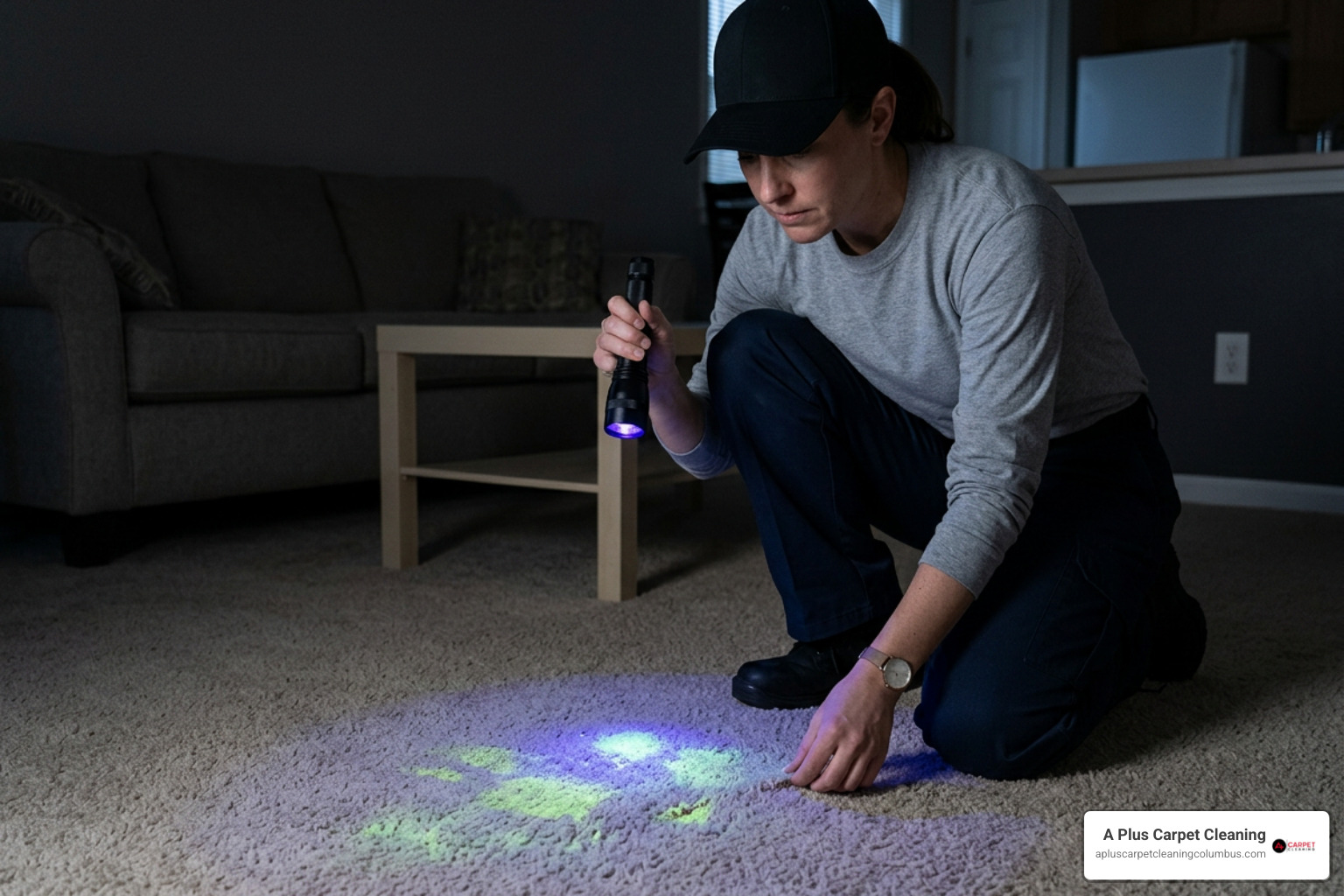
To find hidden trouble spots:
- Use a UV Blacklight: Darken the room completely and hold a 365–395 nm ultraviolet flashlight 12 to 18 inches above the floor. Dried urine deposits fluoresce a dull yellow-green or neon-yellow color due to phosphorus and protein breakdown products.
- Mark the Outlines: Place strips of blue painter’s tape around the outer perimeter of every glowing spot. Check baseboards, sofa skirts, and corners, where dogs often lift their legs.
Because dog urine puddles outward beneath the surface, the contamination in the foam padding is often two to three times larger than the visible spot on top. If surface cleaning fails to resolve the odor, liquid has saturated the pad.
To address deep padding issues without specialized equipment, saturate the marked area with an enzymatic solution so it penetrates as deep as the original accident. Cover the damp spot with plastic wrap for 24 hours to prevent rapid evaporation, allowing the bio-enzymes to digest the crystals. For widespread pad saturation, targeted pet stain carpet removal with sub-surface extraction tools is necessary to prevent persistent re-wicking.
Critical Mistakes to Avoid When Cleaning Dog Pee from Carpet
When tackling pet accidents, avoiding common DIY errors is just as important as choosing the right ingredients:
- Using Steam Cleaners or Hot Water: Applying temperatures above 140°F denatures the proteins in dog urine. This causes the protein molecules to chemically fuse to synthetic carpet polymers (such as nylon and polyester), permanently locking in yellow stains and sulfur odors. Always clean pet urine with cool or lukewarm water.
- Using Ammonia-Based Cleaners: Ammonia is a natural breakdown byproduct of pet urine. Applying glass cleaners or ammonia sprays leaves behind a scent profile that smells like a territorial marker to your dog, encouraging repeat accidents in the exact same spot.
- Aggressive Scrubbing: Vigorously rubbing wet carpet fibers frays pile yarns (causing permanent carpet blooming or fuzzing) and drives liquid deeper into the backing. Always blot with steady downward pressure.
- Ignoring Rinsing: Leaving concentrated dish soap in carpet fibers creates a sticky, invisible residue that attracts dust and everyday soil, forming a dark shadow over the cleaned area within weeks.
- Improper Machine Usage: Regular hot-water extraction machines without specialized pad-flushing attachments can spread deep-set urine across a wider perimeter. In severe saturation cases, comprehensive deep cleaning carpet methods designed for pet bio-hazards are required.
Frequently Asked Questions About Dog Urine Removal
Can vinegar and baking soda permanently remove dog urine smell?
Vinegar and baking soda are effective for neutralizing surface ammonia and absorbing fresh moisture, but they cannot fully eliminate old urine odors. They do not break down insoluble uric acid crystals trapped inside carpet backing and padding. When ambient humidity rises, those crystals reactivate and release odor. Additionally, a dog’s sensitive nose can still detect lingering pheromone markers, which may trigger territorial re-marking unless broken down by bio-enzymes.
Should you use a steam cleaner on dog urine stains?
No. Steam cleaners operate at temperatures exceeding 212°F, which chemically alters and bonds urine proteins to synthetic carpet fibers. This heat-setting reaction makes both the yellow discoloration and the odor permanent. Instead of steam, use cool-water blotting, mild DIY neutralizing solutions, or dedicated sub-surface cold-water extraction tools.
How long should you let a homemade cleaner sit on a urine stain?
Liquid DIY solutions (such as a 1:1 vinegar-water mix or diluted hydrogen peroxide) should dwell for 5 to 15 minutes before blotting to allow sufficient contact time with surface salts without over-saturating the backing. When applying dry baking soda over damp spots, leave the powder in place for several hours or overnight until it dries into a vacuumable crust.
Conclusion: When to Call the Professionals
While homemade remedies like vinegar, baking soda, and diluted hydrogen peroxide work wonders for fresh, surface-level dog accidents, older or repeated pet stains often soak deep into the carpet padding and subfloor. When household ingredients only temporarily mask the issue and the sharp scent returns on humid days, it is time for professional intervention.
At A Plus Carpet Cleaning, we bring over 20 years of certified, eco-friendly expertise to homeowners throughout Columbus and Grove City, Ohio. Our advanced, truck-mounted deep-extraction equipment and specialized bio-enzymatic treatments flush out embedded uric acid crystals and bacteria from the carpet backing and cushion beneath. If you are struggling to get stubborn dog urine smell out of carpet, our dedicated technicians are available 24/7 to restore fresh, healthy air to your living space.